
About AI.
The topic of Artificial Intelligence has taken the status of one of the largest technological trends of the current period.
Regardless of whether you use a mobile phone, buy things online, watch movies, or chat with chatbot, there is a high probability that AI will be involved in the process.
While many organizations, students, and workers find themselves in need of using intelligent technologies more often than not, one question remains the same: What is AI?
The definition of AI is something everyone can benefit from understanding.
It is impossible to underestimate the role that artificial intelligence plays in today’s world, and we guarantee to provide you with information about new technologies as part of our service.
In this article, you will find out what AI is, how it works, its history, advantages, practical application, newest models, and future perspectives.
This article provides an overview of AI, how it works, its history, benefits, applications, newest models, and future development.
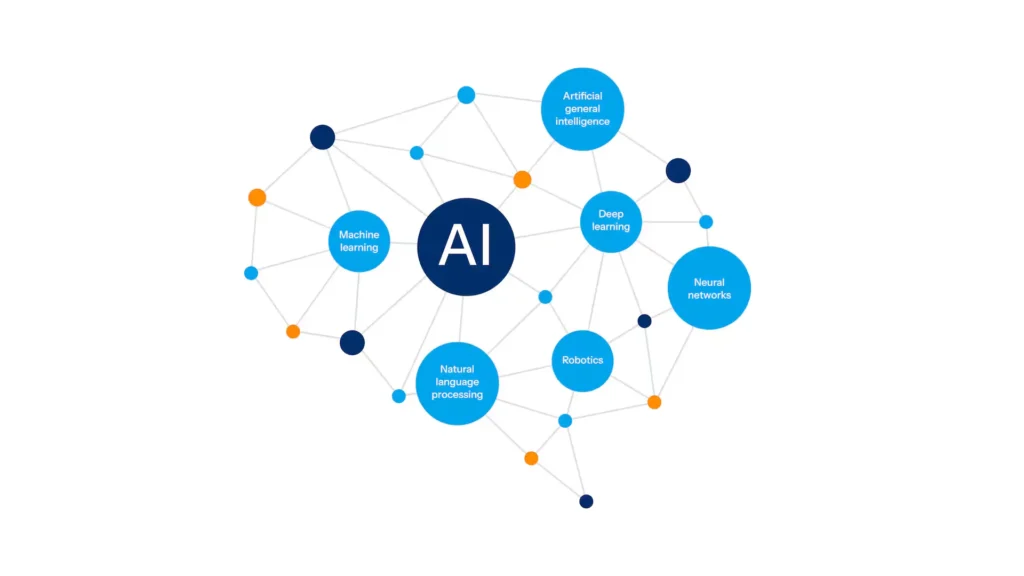
What Is AI? Defination.
It would be easiest to answer what is AI as AI being the term for machines and systems which carry out tasks which require intelligence on the part of humans.
“Artificial Intelligence,” commonly referred to as AI, is the study and development of computer systems able to learn, reason, make decisions, understand languages, identify images, and solve problems.
While normal computing software operates on the basis of definite procedures and protocols, the concept of artificial intelligence allows the computer to learn from information, identify patterns, and become better at its task.
In modern times, we find the application of AI everywhere: from searching the internet to operating our self-driving cars.
What Is AI in Simple Terms?
That said, most people wish to understand what AI is in simple English.
AI is the computer technology that makes computers intelligent and makes them do human actions. These computers do more than carry out orders; they examine information and act on the examination.
Examples include:
1. Google Maps will take you to wherever you want to go.
2. Netflix suggests movies depending on your choices.
3. ChatGPT is listening to you.
4. Voice assistants know what you’re saying.
How Generative AI Works
Generative artificial intelligence models are trained on huge data sets.
The models learn patterns of language, images, and relationships among other things.
After the prompt is provided by the user, the AI creates unique output from what it has learned.
Some examples of generative AI tools are:
- ChatGPT
- Gemini
- Claude
- Midjourney
- DALL-E
- Adobe Firefly
- Hostinger Horizons
- Microsoft Copilot
- N8n
- Blue Prism
- Zapier
- Gumloop
- Gamma
- Google labs
What Is AI in English?
To get to know what is AI in English, you should know its meaning, which is quite easy.
AI means intelligence created by man in machines.
The term “artificial” means man made while “intelligence” means thinking ability of solving problems and reasoning.
Both Artificial Intelligence means machines capable of doing intelligent things.
What Is AI in Computer Science?
The other popular question often raised by individuals concerns what is meant by AI in relation to computer science.
In the computer terminology, AI may be explained as the field of computer science that focuses on the development of systems or software which can mimic human reasoning and decision-making abilities.
In computer science, AI encompasses such fields as:
Machine Learning
Deep Learning
Natural Language Process
Computer Vision
Robotics
Expert Systems
All these contribute to making tasks more complex for computers.
History of AI
Learning about the evolution of the technology can give us insight into how AI got to where it is right now.
Early Foundations
Intelligent machines have been talked about even before the advent of computers. The ancient myths and philosophies have always mentioned intelligent beings that could think by themselves.
The Birth of Artificial Intelligence
In the years between the 1970s and 1980s, the appeal of AI technology became low due to lack of technology and over-expectations from the public.
The AI Winters
The advent of machine learning in the 1990s and early 2000s brought back the interest in AI.
Machine Learning Revolution
Increased computing abilities, connectivity via internet, and availability of data made more sophisticated AI technologies possible.
The Generative AI Era
The creation of current generative AI systems marked the point where public perception about AI changed drastically.
Currently, anyone looking for what is AI comes across very sophisticated technologies that can generate text, write code, produce images, and help solve complicated problems.
Who Is the Father of AI?
While talking about AI, it would be essential to acknowledge some of the people who helped in establishing this technology.
John McCarthy has been widely recognized as the father of AI.
It was he who coined the phrase “artificial intelligence” in 1956 and contributed a lot to the research of AI.
Some other notable personalities who played their part in this regard include:
Alan Turing
Marvin Minsky
Herbert Simon
Allen Newell
Which Best Defines AI?
There may be several answers to what is AI but perhaps the best one would be:
“AI is the ability of machines and software programs to simulate human intelligence through learning, reasoning, problem solving, perception, and decision-making.”
The above definition can apply equally well to conventional and generative AI systems..
How Does AI Work?
To know what is AI we must understand how it works first.
Data Collection
Information is needed in large quantities to develop AI systems.
Sources of the information include:
- Images
- Videos
- Text files
- Websites
- Sensors
- Interactions
Training
Training is an important part of AI and essential for finding the answer to What is AI.
Information is used to train an AI model.
In doing so, the AI system discovers trends within the information.
Learning
The more data the model analyzes, the better understanding it acquires.
Predictions and Decision making
An AI system, once trained, can make predictions, offer recommendations, classify information, or make decisions.
Improvement by Feedback
AI systems can be able to provide predictions, recommendations, classification, or decision-making after training.
A lot of AI systems undergo continuous learning based on new knowledge received.
Core Technologies Behind AI
There are many technologies behind contemporary AI systems. Knowing them is the best way to understand what is AI.
Machine Learning
Machine Learning is a technology that teaches machines to learn data without the need for programming each operation individually.
Machine learning has become one of the key aspects of artificial intelligence.
Deep Learning
Deep Learning is an advanced type of machine learning based on the same algorithms as used by people when thinking with their brain.
Deep learning helps develop artificial intelligence that can deal with complicated information like voice and image recognition.
Natural Language Processing
It is an algorithm which enables computers to understand human languages.
This technology forms the basis for:
- Chatbots
- Voice Assistants
- Translation Software
- AI Writing Tools
Computer Vision
Computer vision technology allows computers to process images and videos in real-time.
Uses of computer vision include:
- Facial recognition
- Medical imaging
- Self-driving cars
- Security camera systems
Robotics
Robotics is the integration of artificial intelligence with machines that can carry out certain actions without human intervention.
What Is AI Technology?
A common search query about what is AI technology is used by many people because they are interested in understanding how today’s artificial intelligence works.
What is AI technology? This means all those systems that help machines think in a smart way. They include:
- Machine learning
- Deep learning
- Generative AI
- Neural networks
- Computer vision
- Natural language processing
- AI agents
Generative AI: Transforming the Future
One of the most significant advancements made in recent years is that of Generative AI. To know the answer to What is AI we must know about Generative AI.
Unlike other forms of AI, Generative AI generates new data instead of just analyzing the available data.
Generative AI can create:
- Articles
- Pictures
- Video clips
- Sound bytes
- Presentations
- Computer codes
This advancement has greatly influenced the concept of what AI entails and what intelligent machines can do.
Large Language Models (LLMs)
One of the most important innovations in the field of AI could be the emergence of Large Language Models. Large Language Models refer to those models that have been designed to learn from large volumes of text-based data and can understand, generate, summarize, and translate natural language.
If asked about what is AI nowadays, the answer will most likely be provided in the form of LLMs, which show just how far we have come in terms of AI development.
Modern LLMs are capable of:
- Answering sophisticated queries;
- Generating articles and reports;
- Creating marketing content;
- Writing software code;
- Translating languages;
- Analyzing texts.
Rapid development of LLMs turned AI from an obscure technology to something used by millions of people every day.
Popular AI Models in 2026
The landscape in AI keeps on changing due to the constant evolution of powerful AI models.
Examples are important to fully understand what is AI.
GPT Models
These GPT models from OpenAI have been one of the most commonly used AI models in writing, research, coding, and even business tasks.
Gemini
This Google product comprises an ensemble of models for language understanding as well as multimodality, enabling users to create text, images, voice and videos using one single model.
Claude
Claude, developed by Anthropic, is known for its excellent reasoning skills, long context understanding, and development of safe AI models.
Llama
Llama models created by Meta have grown popular in the developer community for creating AI models.
Mistral
The Mistral AI models have attracted attention because they create high-performing language models that require minimal computational power.
AI Agents and the Rise of Agentic AI
With the advent of increasingly sophisticated technologies, the AI systems have progressed from basic question-answer processes.
The AI agents are intelligent software applications created for the purpose of performing various tasks on behalf of their users.
Unlike question-answer mechanisms, AI agents are capable of:
- Planning their workflow;
- Gathering information;
- Employing external applications;
- Performing complex tasks;
- Adjusting to new conditions.
For instance, an AI agent may conduct research, prepare a document, produce a summary, schedule appointments, and provide reports without any user intervention.
What Is AI and Agentic AI?
Agentic AI can be described as a form of AI where multiple AIs work together to complete one task.
Most industry experts consider agentic AI as the next stage of artificial intelligence since it includes reasoning, planning, execution, and adaptation processes.
The current definition of AI involves understanding autonomous systems capable of doing something instead of producing content.
Multimodal AI
The previous models of AI worked on one data source only.
Multimodal AI is able to understand several sources of information at once.
It involves:
- Text
- Images
- Audio
- Videos
- Documents
The advantage of multimodal AI is that it allows for more convenient communication and even helps to address more complicated tasks due to the possibility to integrate knowledge derived from several data sources into one.
For instance, a multimodal AI assistant would be able to consider the photo, interpret it and any accompanying text, and make some conclusions based on these.
Popular AI Tools Used Today
Thanks to the growing popularity of AI, numerous helpful applications have appeared that can be used by businesspersons, creators, and students.
ChatGPT
It is widely used for writing, researching, thinking creatively, coding, and productivity.
Google Gemini
Its features include multi-modality, ability to work with Google services, and other advantages.
Claude
It excels at handling long texts and reasoning on them.
Midjourney
With Midjourney, one can produce high-quality pictures and art pieces.
Adobe Firefly
Adobe Firefly creates visuals and edits them.
GitHub Copilot
It helps developers write their codes and fix them.
Notion AI
Notion AI allows for organizing information and improving productivity.
Here are several examples of helpful AI tools.
What Is AI Really Used For?
People have a good idea about the technology of artificial intelligence, yet they wonder what artificial intelligence can be used for.
Here’s where its numerous applications come in play.
Healthcare
Artificial intelligence enables doctors to identify diseases, analyze images, form treatment strategies, and speed up drug development.
Education
AI can be used in education establishments to provide tailored learning and intelligent tutoring.
Finance
Banking organizations apply AI solutions in order to spot frauds, make risks assessments, and automate customer service.
Retail
Retail companies use artificial intelligence in order to optimize inventory management, generate recommendation systems, and organize personal marketing campaigns.
Transportation
Navigation, traffic management systems, and even self-driving cars use artificial intelligence algorithms.
Manufacturing
Manufacturing organizations also employ AI for maintenance prediction, quality control, and process optimization.
Uses of AI Across Industries
The applications of artificial intelligence have become more widespread over time as companies identify ways to utilize AI effectively.
These applications range from:
- Automating customer services
- Monitoring cybersecurity threats
- Performing predictive analytics
- Generating content
- Making product recommendations
- Voice recognition
- Image processing
- Diagnosis of diseases
- Scientific research
- Programming
There are virtually limitless applications for AI as the technology becomes more advanced.
What Is AI Application?
Any software application that makes use of AI technology to solve certain problems is termed an AI application.
Some examples include:
- Virtual assistants
- Recommendation engines
- Fraud detection systems
- Diagnostic systems
- Language translators
- Search engines based on AI
An AI application helps improve processes within organizations.
What Is AI, Examples?
Many individuals engage with artificial intelligence without even knowing it.
Some of the common instances include the following:
Smart Assistants
- Siri
- Alexa
- Google Assistant
Content Recommendation Platforms
- Netflix recommendations
- YouTube recommendations
- Spotify playlists
AI Content Platforms
- ChatGPT
- Gemini
- Claude
- AI Image Creation Platforms
- Midjourney
- DALL-E
- Adobe Firefly
Routing and Navigation Platforms
- Google Maps
- Waze
Advantages of AI
Artificial Intelligence offers numerous benefits for individuals and organizations.
Productivity
The application of AI will automate repetitive jobs so that workers can concentrate on other activities.
Decision Making
AI technology can be used for making more effective decisions within organizations.
Minimal Mistakes
AI-based machines can execute tasks flawlessly.
Round-The-Clock Functioning
As opposed to human beings, AI software applications function all day long.
Efficient Data Processing
Big data is processed at an incredible speed with the help of AI.
Customer Satisfaction
With the use of AI, customized suggestions can be made by businesses.
Challenges and Risks of AI
Even with many advantages associated with AI, there are also disadvantages associated with the technology.
Data Privacy Issues
AI tools usually need plenty of data from users.
Bias in Algorithms
Use of poor-quality training data may result in bias.
Cyber Security Risks
AI tools are prone to becoming targets of attacks and manipulation.
Displacement in Workplaces
The automation associated with AI may affect some employment sectors.
Ethics of AI
AI development needs to consider ethical concerns such as accountability.
The Future of Artificial Intelligence
The future looks bright for AI.
There are some trends that could drive the future of AI.
More Intelligent AI Agents
AI agents will become more autonomous and efficient at handling complicated tasks.
Multimodal Systems
The future systems will be able to handle multiple modes of information like text, images, video, and audio.
Personalized Virtual Assistants
AI virtual assistants will gain more intelligence.
Medical Discoveries
Scientists are harnessing AI technologies to make breakthroughs in various fields such as medicine and materials science.
Businesses Transforming With AI
Organizations will adopt more AI technology in business functions.
While AGI is still a hypothesis, the rapid advancements in AI indicate that it will keep advancing.
Conclusion
Artificial intelligence (AI) has transformed from a specialist academic discipline to one of the revolutionary forces in the history of mankind. Comprehending what is AI is vital for any individual trying to comprehend a world that is driven by intelligent applications.
Be it machine learning, generative AI, AI agents, or multimodal AI, artificial intelligence keeps evolving as one of the most impactful innovations across various sectors of today’s society. From revolutionizing the health sector to transforming the educational landscape, AI keeps making our lives better.
As one of the leading writing help services online, we recognize the importance of comprehending artificial intelligence beyond being just a professional technologist.
To know what is AI one might need to go down a deep rabbit hole but a simpler answer to it may be ‘AI is the ability of machines and software programs to simulate human intelligence through learning, reasoning, problem solving, perception, and decision-making.’

Frequently Asked Questions
What is AI in simple terms?
In simple terms, AI means training computers to do things that normally demand human intelligence like learning, problem solving, and decision making.
Which definition best answers what is AI?
The best definition of artificial intelligence would be a system’s ability to exhibit intelligence by simulating human actions such as learning, reasoning, and decision-making processes.
Who invented AI?
John McCarthy is regarded as the inventor of AI or the father of artificial intelligence because he came up with the name.
How can AI be applied?
AI technology is applicable in areas such as healthcare, education, financial services, retail industry, manufacturing, transport, cybersecurity, and customer service.
What is AI in computers?
In computers, AI refers to systems designed to do things that otherwise demand human intelligence.
What are the benefits of AI?
Among them include increased productivity, improved decision-making, error reduction, efficiency, data analysis, fast responses, and improved customer experiences.
What is AI technology?
Examples of AI technology are machine learning, deep learning, natural language processing, computer vision, robotics, generative AI, and intelligent agents.
What is AI definition?
Uses of AI include automation, data analytics, disease diagnosis, fraud detection, content creation, software development, and customer service.
Examples of AI?
Some examples of AI include ChatGPT, Gemini, Claude, Siri, Alexa, Midjourney, GitHub Copilot, Google Maps, and Netflix suggestions.
What is AI history?
The history of AI started in 1956, with the technology developing from its machine learning, deep learning, and generative AI stages to becoming an influential technology.
What is AI in English?
Artificial Intelligence, in English, refers to man-made systems capable of accomplishing functions that require intelligence, including decision making and learning.
AI application?
The AI application is software utilizing artificial intelligence to accomplish certain functions.